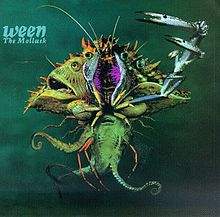
Ween’s The Mollusk, Music From the Depths of the Ocean

Some artists thrive off of sounding heavy and aggressive, some off of evoking high energy, some from being emotionally appealing, some by creating unique in-depth atmospheres. And then there are artists who thrive off of just being as weird and abnormal as possible. The members of Ween are that last type of artist.

Ween’s The Mollusk is a nautical themed journey through the, for the lack of a better word, creative minds of the band’s members and I must say, it certainly sounds like it was written and performed by creatures from the depths of the sea. But the question here really is: is that a good or a bad thing? Well to answer that, let’s dive a bit further, shall we?

The first track, “I’m Dancing in the Show Tonight” is a reworking of the Christmas novelty song “Are My Ears on Straight?” Except unlike the original, this song comes off as a demented kind of silly, not necessarily evil but certainly unnerving. The vocals are constantly shifting through levels of distortion and modified pitch, making for an absolutely odd opening to the album. As far as the quality of the song, it’s fun, but not really the best this album has to offer.

“The Mollusk” however, is really interesting to me. It’s very atmospheric in an entertaining way. I really like the sliding synths, they remind of me another Ween song, “Flutes of Chi.” Oh, have I mentioned this isn’t my first rodeo with Ween. I kind of knew what to expect going in, but seeing as it was Ween, was still shocked by a lot of what I found. Regardless, this song is really interesting and entertaining. The ending with the synthesized brass and spoken word bit really drives home the absolutely lovely oddity that is this track.

“Polka Dot Tail” is a combination of nursery rhymes and absolute psychedelic madness and nonsense. This is definitely one of the trippier sounding tracks on the album. Unfortunately, it’s still one of the weaker tracks on the album. That’s not to say it’s bad, or even that it’s not good, just that there’s so much more to be explored here that stands out more.

An example of that being “I’ll Be Your Jonny on the Spot.” This song is plenty fast with very heavy distortion all throughout. Despite the high energy the instrumental has, the vocals are very monotonous, only fast enough to keep up with the song. Also, this song has an absolutely crazy fun weird guitar solo that I keep wanting to relisten to the song for if nothing else but that. This is my easy pick for favorite song in the first half of the album.

“Mutilated Lips” is another song like “Polka Dot Tail” where I don’t have much to say about, other than I really like it and it’s really tripy. Also, the line “Take my hand, you ugly girl” really makes me giggle for some reason. This is also the point on the album where I realized almost every song has a guitar solo, but all of them are radically different from each other, an aspect I find very interesting and amusing.

“The Blarney Stone” is the next track and it’s…uh…pirate themed? Rather, that’s not a question, it is pirate themed, but my question is more why. Unfortunately, despite the interesting theme this song gets a bit plain. The joke is funny, but not funny enough for three minutes especially when the song is pretty repetitive overall. It’s unfortunate because silly pirate themed things are something I’m generally drawn to, but this song is just, well, kind of boring.

“It’s Gonna Be (Alright)” is the only song on here that really just sounds like a normal song a normal band would write and I genuinely think that is its greatest weakness. It’s my least favorite track on the album on the basis that amongst everything else it’s just kind of disappointingly plain. I might like it more outside the context of the album, but that’s not really what this review is about. But it’s fine, because I’ve got quite a bit to say about the rest of the songs on this album.

So much to say in fact, that I’m going to have to split this review in half. Every song is so unique on this album that I can’t really group them together as I often do, so we’ll just have to finish this in two parts.

Thank you for reading as per usual, and I hope to have you all next week as I finish up my review on Ween’s The Mollusk.

CrazyEightyEight’s Burning Alive Part 2

Last week I began discussing my opinions on CrazyEightyEight’s 2018 record Burning Alive. This week I’m excited to say we’ll be picking up right where we left off to finish out the album, and boy am I excited.

And that’s because next we have “Moloko Plus.” Now I don’t know anything about A Clockwork Orange, which this song is based on, but if it’s anywhere near as awesome as this song is I need to watch or read it soon. This song opens on a crazy heavy section with a guest vocalist before slowing itself all the way down for a lovely little soft instrumental break. This section gives me serious Frances the Mute vibes and I say that as an absolute positive. But then it branches out, becoming a heavier break while still maintaining the tense, lurking feeling like something crazy’s about to happen. Then the vocals come back, but the music doesn’t immediately jump to join it, instead continuing the tense buildup until finally it pays off to an incredibly dramatic return before repeating the intro in a poetic, bookending fashion. I haven’t experienced a song that moved me this much since we talked about Daft Punk’s “Touch” on my first album review for this blog. What more can I say except that this an exceptional listening experience packed into a brief five minutes.

“Hannah” is exactly where it needs to be on this album. It’s a soft, slow, piano focused track with beautiful, haunting melodic vocals. I get strong early Evanescence vibes, and not the radio singles. I’m talking the meat of that early bit, those dreary, haunting, and yet beautiful tracks that feel oddly whimsical despite their depressing nature. What I’m saying is that this song speaks to me on levels of both nostalgia, wonder, and just being a beautiful song. It fits so well after the crazy intensity of “Moloko Plus” and it may very well be my second favorite track on this album, only overtaken by its predecessor.

“You Were Right” is almost a weaker track, in fact most of it is. It fits well, being a softer track to slowly build back up after “Hannah,” but it borders on not being memorable. Almost. Most of this song isn’t terribly worth mentioning. But the ending. The ending. “You Were Right” ends on absolutely insane percussion solo that is so undeniably fun and enjoyable that I can’t even bring myself to disregard this song. Maybe it’s a bit odd that a good percussion solo can absolutely save a song for me, but hey, I never claimed not to be a bit odd myself.

To get back to a bit more normality in my opinions we have “Ian Hates Gretchen,” a song I enjoy all the way through. This song is an absolute highlight of Lauren Babic’s vocal talent, as she shifts between vocal styles constantly and it always comes off as extremely fluid and natural. This song is a lot more hard rock than it is metal, but that doesn’t detract from the quality at all. It’s just a really solid track towards the end of the album.

“300 Pages” is an interesting song, as it’s a calm interlude that precedes only a singular track on the album. Perhaps calm isn’t one hundred percent accurate, as this song does have a bit of a dark, waiting undertone. Apparently it’s meant to invoke imagery of The Hobbit, which works as that story is a prequel to The Lord of the Rings just as this song is in a way a prequel to the album’s final track “My Friends, You Bow to No One.” I’ve not much more to say about this interlude other than it’s nice and gives me a slight old-school video game vibe, particularly reminiscent of the type of song you’d find in Earthbound.

So without further adieu, we have the grand finale track, “My Friends, You Bow to No One.” And oh boy, does it feel like a grand finale. Early into the track we get the pleasure of hearing Lauren’s fry vocals and I must say: they’re downright horrifying! While the lyrics in this track are a bit repetitive the song remains relatively dynamic, which is something I certainly appreciate. This song also incorporates some classical strings as well, along with a fantastic highly dramatic and theatrical sounding interlude before rushing into a fast session where Lauren belts out lyrics like an angry punk rock singer. Overall this song is a fantastic closer to the album that contains all the fitting drama of a cinematic climax, the type of thing this album seems to be going for all throughout.

While I didn’t get much of the movie references throughout Burning Alive, it never felt like that mattered. Maybe I’d enjoy the album more if I did, maybe I wouldn’t. It’s not important, what is important is that this album is good. Like, really good. It’s a cinematic feeling, deeply interesting metal album based on cinema itself and each song feels like it lends itself to that idea, for better (usually) or for worse (occasionally). The musicians on this project are crazy talented. Each one shines throughout the album at some point, showing off their technical skills while all still managing to come together as a fantastic cohesive whole.

For a final rating, I’d give this album a 7/10, as its an album that goes well beyond the average in quality and is one that I’ll surely enjoy relistening to in the future.

I recommend this album for any rock and/or metal fans and for any cinema buffs who will undoubtedly get more out of that side of the music than I will. And as per usual, I wanna thank you, the reader, for doing that thing where you read what I write for whatever reason. Hopefully you’ll continue doing that when we come back next week to talk about Ween’s 1997 record The Mollusk.

CrazyEightyEight’s Burning Alive Part 1, I Don’t Get It (But That’s Okay)

I may have listened to a decent amount of music for someone my age, or maybe I haven’t, I can’t be too sure. But what I am certain is that I have not seen nearly as many movies as someone my age probably would have, and this album was really telling of that.

If you can’t tell by the name of the band itself, well, maybe you’re in the same boat as me, but what I’m getting at is that this band loves their movie references. In fact, every track on this album is a reference to a specific movie. Unfortunately the only two movies referenced that I have seen I hardly remember. I bring this up to say that lyrical content won’t be much at all a focus of this review as I just…kinda don’t get any of it.

That out of the way, let’s start talking about the songs themselves. The album opens with an interview with Alfred Hitchcock, followed heavy instrumentation and an angrily growled “SILENCE!” The above describes the first track “Reboot.” This track transitions directly into the second: “Fortune and Glory, Kid.” First my compliments go to the bassist, Patty Walters, who comes out of nowhere quite often to surprise me with some pretty solid playing. “Fortune and Glory, Kid” definitely sets the tone of the album as singer Lauren Babic switches seemingly effortlessly between melodic singing and harsh growling, screaming, and screeching. While these opening tracks might not be my favorites, they definitely do a good job of letting the listener know what they’re getting into and are still pretty solid tracks.

“Shinebox” continues the same style. It bears mentioning that the music has the same ability Babic does, in that in can shift from a brutal high energy to low, mysterious and ethereal sound. It’s what I believe this band does absolute best: their ability to switch between moods and feel natural. “Shinebox” as a song itself is a direct improvement on the formula from “Fortune and Glory, Kid” with a highly memorable chorus to boot.

“I Am Tetsuo” is a bit of a softer track, though not too dramatically. The chorus on this one sounds cheesy, not in a bad way, just in a very amusing way. Another compliment to throw out that’s displayed really well in this song is that this band is fantastic at dramatic build ups as well as sick sounding breakdowns which they often combine together to high effect.

“Bastard from a Basket” immediately is a lot heavier than the last track. Unfortunately I don’t have much to say about this track other than it might be the least interesting. That’s not to say it’s bad at all, it’s just a bit plain after the last few tracks. “The Shimmer” is a short noisy interlude I could do with or without. I suppose it’s meant to be a breather before the incredibly heavy “Nitroglycerin.”

Speaking of, “Nitroglycerin” is next and oh boy is it fast and heavy. We’re reaching Thrash territory here, which I’m all for. This song also may have the coolest slow ethereal section of the entire album, as it quickly backs it with the fast aggressive instrumentals found elsewhere throughout the song, takes a break for a heavy breakdown, then combines all of the above together for what may be one of my favorite parts of this album. Another unfortunate matter is that the next song, “Tears in Rain,” doesn’t keep the energy up well. It’s another one of those tracks that’s unfortunately a tad bit forgettable. But hey, I’ll go ahead and say it’s the last of its kind on the album.

Unfortunately, that’s about all I can really cover for today as I have so much to say about the rest of the album that it could easily be its own post and this one has already gotten pretty long. So, for the first time in a while, this album review will be a two parter, though I’m sure you’ve already put that together by the title of the post.

See you all in next week to wrap up my thoughts on CrazyEightyEight’s Burning Alive and, as always, thank you for reading.

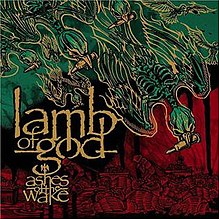
Lamb of God’s Ashes of the Wake, Things Are Getting Pretty Heavy

We’ve bounced around between genres a lot here on this blog, and I must say I have no intention of stopping that anytime soon. This week’s album, Lamb of God’s 2004 release Ashes of the Wake ranges from groove and thrash to straight up death metal. And let me preface this review by saying: I’m no metal head.

That isn’t to say I dislike metal as a genre, in fact the opposite is true. There’s a load of metal acts I love, some of which I’ll probably end up comparing Lamb of God to. What I mean when I say I’m not a metal head is that I’m not purest of the genre, nor am I a person familiar with or fanatical about all of its sub-genres. I consider Slipknot a metal band, which I think is grounds for high treason in some circles. I say all this as a bit of a defense, as what I may like and dislike here might not fall in line with some metal head readers. So ya’know, reader be warned.

I’ll start by saying that I have a few problems with Ashes of the Wake as a whole. No, it’s not the angry, violent lyrics or the growled, percussion like vocals. I knew what I was signing up for here. My main gripes with this album come instead from the song structure and the mixing.

I’ll start with the song structure: a lot (not all) of these songs are very…static. There’s a lot of riffs and patterns that repeat over and over and while I understand this is a thing in a lot of metal music I also tend to consider it a weakness of the genre. Something about repeating lines of really fast chugging guitars and speed-kicking drums tends to get grating faster than regular music for reasons I can’t explain other than to say I don’t like it. At the very least the riffs could be more melodic if they’re going to be so repetitive. Despite the actual speed everything’s played at, a lot of these songs feel slow due to the same measures just being repeated over and over before transitioning to another repetitive section that will then be repeated again later in the song. Repetitive and dull is the complain I have about a lot of these riffs. Again, this doesn’t go for everything on this album, there’s some definite standouts I’ll mention as we go, but I wanted to get this out of the way first.

The second issue I mentioned was the mixing. This album has the same problem a lot of rock albums release around this time had, a problem referred to as “wall of sound” mixing. At the time there was a lot of push for hard rock and metal bands to sound as loud as possible, which led to a lot of rather lazy mixing where all instruments were cranked up to the max, creating a less dynamic sound and more just, well, a wall of sound. There’s so many times in this album where the drummer or one of the guitarists is doing something really cool, but due to the mixing I’m forced to strain my ear to try to pick it out amongst all the other noise.

All that being said, let’s start with the track-by-track analysis. “Laid to Rest” is an opener that lets the listener know what this album’s gonna be like, I sure have to give it that. Otherwise it’s mostly uninteresting. It’s fast, it’s loud, it’s angry and it’s surely a fantastic mosh pit song, but it’s just not very engaging otherwise. “Hourglass” largely has the same problems mentioned previously. Another note about this album is that there are no melodic vocals, only growling, screeching, and spoken word.

“Now You’ve Got Something to Die For” starts my favorite section of this album. This song is definitely very thrash, giving very strong Slayer vibes which I must say I’m really into. This song is where things started to turn around for me and the problems I mentioned previously started to fade away. “The Faded Line” continues that trend with some particularly great drumming. It’s still hard to pick out at times, but it’s really good regardless. The ending of this song is particularly fun and intense as what sounds like air raid sirens begin blaring as the song comes to a climactic, violent ending. Have I mentioned this album is super anti-war? It doesn’t change much about the album, but it’s a recurring theme.

“Omerta” is the reason I wanted to listen to the album, so of course that means I liked it. I liked it beforehand. This is the song I expected the rest of the album to sound like and probably the reason a lot of it disappointed me. This song also is just the most interesting lyrically using biblical imagery and parallels to illustrate the violence and wrath of the Italian mafia. This song seems less anti-war and more story-telling in nature which I think makes it stand out lyrically. Also, what can I say except the music here is really good.

“Blood of the Scribe” is fast, really fast, but sadly that’s about all it has going for it. Unfortunately this is a song that dips back into the issues of the first two tracks. “One Gun” is one of the better songs on the album, if only for being one of the few, and the first, song to actually have a legitamate guitar solo. I didn’t even realize until this track that guitar solos had been nearly entirely absent from this album up to this point. This kinda adds to the whole lack of variety and repetitive problem, even the most gimme aspect to spice up a rock song is absent from most tracks here. “Break You” is another track that doesn’t do much for me.

“What I’ve Become” is another unique track in that it’s the only song on the back half of this album I actually really like. There’s another guitar solo here that’s really good. This song is fast like “Blood of the Scribe,” but uses that to speed along, never wasting time with repetitiveness. The slowest part of the chorus which honestly works really well, contrasting with the fast verses. A great standout towards the end of the album.

“Ashes of the Wake” is a song that is absolutely butchered by the mixing. Part of the song is a suite of guitar solos by four different musicians, but unfortunately all of their solos are buried among the rest of the noise and a lot of the intricacies are lost because of this. This song would be so much greater if the other guitarists would just let whoever is playing the solo shine, or, you know, if the mixing on this album wasn’t terrible.

“Remorse is for the Dead” opens with a bit of bait in a real nice clean guitar section before becoming everything I dislike about this album for, well, the rest of the song. I don’t have much to say about this one that hasn’t already been said.

Overall this album isn’t bad persay, but it’s far from being great and I honestly don’t feel like it’s purely the band’s fault here. There’s some standout tracks, and even the songs that aren’t great aren’t bad either. At worst this album is a bit boring, at best it’s high adrenaline thrashy goodness.

My final rating of this album is a 5/10, for an album that does an average job, not great, not bad, just somewhere in between.

Sorry to any metal heads I may have upset with my review here, but maybe I’ll be able to make it up to you, as next week’s album is another metal record: CrazyEightyEight’s 2018 release, Burning Alive.

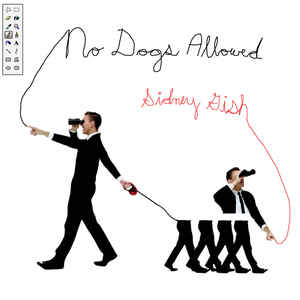
Sidney Gish’s No Dogs Allowed, Depressing Indie to Contemplate Life To

To me, Indie music has always seemed like Rock but with lower production, a generally chiller vibe, and the freedom for the artist to do whatever they’d like, be it for better or for worse. So where does album fall in that?

Well, I won’t keep you waiting: it’s definitely for the better.

Sidney Gish’s 2017 No Dogs Allowed definitely sounds like it was written by a 20 year old in 2017, and I mean that in the best way possible. The sentiments and general feelings of anxiety and questioning of self worth shining throughout the album give are really given meaning by understanding who wrote them, and gives the realization that, if nothing else, this album is undeniably genuine.

The song opens on an odd tune, “Bird Tutorial.” It’s odd in that nothing else on this album is like it. It seems to use audio ripped from a tape about teaching a parrot to talk, and uses music to make the recorded audio into a small song. Is it gimmicky? Absolutely. But what matters is that it’s really good and very fun, and that it furthermore starts as a strong intro to the album.

“Sin Triangle” however, gets to the meat of it. I said before that this album has running themes of anxiety and questioning of self worth, and this track makes that abundantly clear with its chorus opening with “Two-faced bitches never lie and therefore I never lie.” Another thing to note is that the vocals aren’t perfect, there’s cracks and notes that just feel off-key, but honestly it works to these songs advantage. It gives it that extra edge and sense of genuineness. The whole production here does give off a sense of amateurishness, but again while this could be a negative, it’s instead another aspect of this album’s charm. As for the lyrics, besides the subject matter, there seems to be a focus on simplicity, yet with strong meanings behind every simple phrase. It’s certainly artistic to say the least. “Good Magicians” caries forward the same quality with a nice vocal filter and a fun pace that carries throughout the entire song.

“Sophisticated Space” stuck out to me. It’s a song about college from the negative point of view from someone socially inept, weighed down by their anxiety and resorting to their imagination to grin and bear it. At least that’s what I get from the song, and I must be honest, it’s something I find deeply relatable. Maybe not as much now as I did my freshman year, but there are still days where I just feel like the elephant in every room and this song really speaks to that.

“I’m Filled With Stake, and Cannot Dance” reminds me that I absolutely adore the song titles on this album. This is a slower song, not to say the only one. Unfortunately if I had to pick a song to my least favorite, it would be this one, but it’s still very good, which I think speaks volumes about the quality of this album.

“Where the Sidewalk Ends” however, is the exact opposite, taking its place as my favorite song on this album. The harmonica is wonderful and Sidney’s vocal work here is an absolute knockout. The falsetto in the chorus is especially pleasing to the ear. The optimistic, upbeat music and the whimsical half-happy/half-sad vocals exemplify everything I love about this album. If there’s one song I’d recommend you, the reader, listen to off of this album, then it’d be this one. That and “Impostor Syndrome,” but we haven’t got there yet, have we?

“Mouth Log” serves as a punch to remind you how depressing this album can get, and might be the deepest cutting of them all, “I Eat Salads Now” has a very strong chorus with fantastic backing vocals the second time around, “Rat in the City” is just haunting in a spectacular way, “Not but for You, Bunny” is a fantastic tragic love song, and “Persephone” is both fun and a bit funny, especially the ending. It may seem as though I’m rushing through these songs, and maybe that they even did have as much impact as the previous tracks, but that couldn’t be further from the truth. I adore them all, but all for very similar reasons, and I just don’t want to repeated myself and just gush over this album the whole time, mainly because I don’t think that’d be very entertaining to read.

The other reason may be that I’m so excited to talk about “Impostor Syndrome.” This is the song I heard first from the album and the reason I decided to listen to the whole thing. This song is another representation of everything I love about this album. It really takes the simple phrases with deep meaning approach mentioned previously to a whole new level. I never could have imagined a singer mentioning “PetSmart” and “Walmart” in a song being so powerful and relatable. Relatability, it’s such a great strength of this album. This song also does something I like in that the lyrics of its chorus reference another song, specifically “I Eat Salads Now.” The airplane noises and announcement at the end is a very interesting touch and it really made me think it was the album’s closer, but surprise, we still have the destination of our journey to go.

That destination is called “New Recording 180 (New Year’s Eve)” and it serves as a fantastic album closer, with a surprisingly optimistic ending to even out the rampant anxiety and depression. It’s the subtle optimism littered throughout the album fully realized, perhaps in the singular lyric “There is a lot you were able to do.” The beauty is that the line can be interpreted both negatively and positively, up to the listeners choice I suppose. As you can tell, I choose to interpret it brightly, as I feel it provides the most closure that way.

Overall, this album was an absolute treat, a little known gem that I’m very pleased to have stumbled across. Maybe it won’t resonate as well with an older audience as it does a younger one, and perhaps that’s it’s greatest flaw, but at the end of the day even if the lyrics don’t connect as well, the music is still fantastic.

My overall rating of this album is a 7/10, a rating given for albums that go well above the average and simply provide for a great listening experience.

As always, thank you, dear reader, for being a reader, and I await next week where I’ll be giving my thoughts on Lamb of God’s Ashes of the Wake.

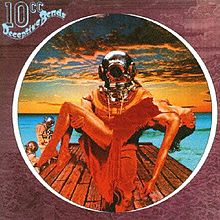
10cc’s Deceptive Bends, Expectations vs. Reality

This week we’re back towards a direction of music I’m more familiar with, some good old fashioned rock’n’roll. Well, kind of.

10cc’s 1977 record Deceptive Bends is apparently the beginning of a new era for the band, as its the first album they wrote after the departure of two of their original members. But I’m not here to compare new and old, and so this review will be solely focused on this album as a unique entity.

You may be able to tell from previous reviews that I’m a pretty big fan of progressive rock. So it’s suffice to say I was quite excited after seeing this album described as “progressive pop” and “pop rock.” After all, if you take the two, combine ’em, and take out the common word, you just get “progressive rock.” But as it turns out, that’s not really what’s happening here, not at all really.

Let’s dive in with the album’s opener, “Good Morning Judge.” Immediately the listener is hit with some nice southern rock-esque guitar before things get all 70s British. “Good Morning Judge” is a fun, sort of silly sounding song that’s all sorts of catchy. Serviced by its multiple refrains bridged together in a loose fashion and accented by a fun old-school guitar solo just after the song’s middle, this song immediately gave me high hopes for what this album would end up being.

The follow up is “The Things We Do for Love,” a song that takes the turn for the…well…Beatles. This song is good, don’t get my wrong. But it really has a thick Beatles-y feel, and seeing as this is a British band from the 70s, it seems suspiciously rip-offy. This unfortunately becomes a trend at this point in the album, as “Marriage Bureau Rendezvous” and “People in Love” both have the same haunting feeling that this is all one big attempt to ride the Beatles train, even if the Beatles hadn’t been a band for nearly a decade at the point of this album’s release.

“Modern Man Blues” strikes the similarities down however by being, well, a blues song. That difference however is about the only interesting thing going on with this song. It has some nice guitar, which is a positive I want to get out of the way and say applies to the whole album. This album has some fun guitar solos, but as someone whose favorite genre is rock, that’s not nearly enough to carry a song, let alone an album.

“Honeymoon with B Troop” is an improvement musically, as the song just feels more…unique. Not that it’s reached the heights of “Good Morning Judge,” but it’s better. Meanwhile, the lyrics read like some weird precursor to the grand sex rock of the 80s, but admittedly more subtle than anything David Lee Roth ever sung.

“I Bought a Flat Guitar Tutor” is an interlude where they make music puns. That is all. “You’ve Got a Cold” continues the silly tone of “I Bought a Flat Guitar Tutor” but in the form of a full song. Besides the humor, which is arguably “kinda funny, I guess?” not much stands out about either of these songs.

“Feel the Benefit” is this album’s prog epic and the one I was most excited for when looking at the track listing. Sadly the song itself is…just alright. The first part is nostalgic nonsense set to cheesy guitar and violins, the second is a slightly racist Latin breakdown, though I’ll give it credit in that it’s more fun than malicious, if the latter can even be said about it. It’s also the best part of the song. Part three goes back to being cheesy and gets weirdly preachy lyrically. The best parts of these songs are by far their instrumental breakdowns and jams, which is also true about the entire album. This song kind of represents everything I feel about this album, in that it’s silly, kind of disappointing, but not in a “it’s terrible” way, just in a “I expected more” way.

The next three tracks apparently weren’t on the original album, but are included in the streaming versions. Since I listened to them, I might as well talk about them as well. “Hot to Trot” is painfully generic high energy music with almost no pay off. “Don’t Squeeze Me Like Toothpaste” is like “You’ve Got a Cold” if it were even less funny. “I’m So Laid Back, I’m Laid Out” however, is actually kind of funny and evokes a similar feeling to “Good Morning Judge.” Honestly, this last track is what I expected the whole album to be after the opening track, and it’s an easy pick for the second best. If only the rest of the album could have been as great as its ends.

Overall, this album doesn’t do much, which is a shame because the musicians clearly have talent. They have some funky ideas, but the whole thing just feels too safe, with the biggest expression of the weirdness hiding beneath being the lyrics, which at times reach near-nonsensical level. It just feels like an album written by a band that wants to be as crazy and experimental as later-era Beatles, but is too afraid to fully commit.

My final rating for this album is a 6/10, a score denoting an above average album that does enough to stand out, but not enough to elevate it much higher.

Unfortunately I didn’t have much to say about this album, but it’s guaranteed to happen occasionally, as every album I listen to can’t be a momentous occasion. Ah well, maybe next week will be different when we take a look at Sidney Gish’s No Dogs Allowed.

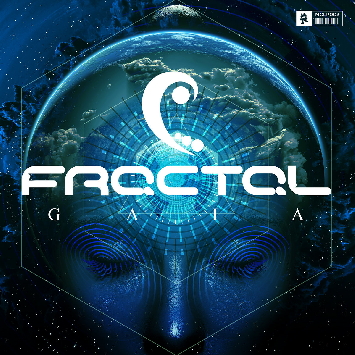
Fractal’s Gaia, Deeper Into the Electronic

As previously discussed, my preferences in music tend to lead towards the rock genre. So why on earth is it that I’m finding myself reviewing another electronic album?

Well you see, dear reader, that’s kind of the point of all of this. To step out of my comfort zone, to try new and exciting things in terms of music. Unfortunately, this does mean that there will be times that I have no idea what I’m talking about and I’m going to come across as woefully ignorant. This may very well be one of those times.

Fractal’s 2015 album Gaia was apparently described by its record label as dubstep, but also as “electronic,” which is as vague as calling In the Court of the Crimson King “rock.” But sure, I’m fine playing fast and loose with vague terms if everyone else here is, and I must say this review will be littered with them. Anyway, let’s stop wasting time and get into the music.

The first thing apparent after listening to Gaia is that the album takes a complete turn in style and sound almost exactly halfway through. The first four tracks are undeniably dubstep, with many recurring traits of the genre I’ll describe a little later on. The last four tracks however, ditch the dubstep elements in favor of a much calmer, serene atmospheric approach. I suppose this is the part of the album they generically described as “electronic.” The middle song, Escape, serves as a sort of bridge between these two sections of the album. I must say the structuring on this album feels…off because of this almost hard split between styles. It feels less like a cohesive whole and more like two separate EPs shoved together to achieve LP status. I suppose this split does make my job easier though, as I’ll be talking about each section in a grouped off fashion, as my opinions tend to be similar between tracks in these groups.

We’ll start with the front half, consisting of “Amor,” “Collide,” “Omni,” and “Fire Away.” I need to get this out of the way as fast as possible now that we’re here: I do not enjoy dubstep. Many of the little defining features bring me an overall sense of discomfort when from what I can tell they’re supposed to bring excitement. I’m okay with music making me feel uncomfortable, but only when that’s the intended effect. Something about the sudden starting and stopping of the instrumentation, the chopped up vocals jumping out disjointedly in between, all as the music grows louder and louder, all of this just brings me to a state of, well, annoyance. I find this type of thing annoying. And these elements are everywhere in these first four songs. While I did like “Omni” and “Fire Away” more than the first two tracks, I still wouldn’t say I derived enjoyment from either, nor that I wish to listen to them again. These songs aren’t all bad I will concede, there are elements here that I enjoy. There are peaceful synths that birth nostalgia and some lovely vocals provided by guests Syrin and Danyka Nadeau. It’s just that overall, I did not enjoy this album’s front half.

“Escape” is different. “Escape” does not have a drop. “Escape” feels very dancey. “Escape” is, well, fun. I recall sitting through, waiting for the song to do something that would break my interest, but that never happened. I enjoyed the song from start to finish, and is something I would gladly listen to again. It’s just a high energy, fun song that avoids what I would call the pitfalls of its earlier peers. But things are about to change. Escape seems to have sapped the last of the hyperactivity out of Fractal, as the next four songs are something completely different.

“Voyage,” “Sanctum,” “Skyline,” and the aptly named “Wind Mantras.” These songs seem to have been made with something completely different in mind. These songs are light, heavily atmospheric, and bring about a feeling calm energy. These are songs one could work to, study to, and even sleep to. “Sanctum” is the greatest standout here, as the longest track on the album and possibly the best, though I’d still say “Escape” is my personal favorite. The whole thing is just very peaceful and relaxing, while still providing a thoughtful atmosphere and never dripping into the realm of boring. It’s not terribly dynamic, sure, but that doesn’t matter for what it seems these songs are trying to achieve. “Skyline” feels like an extension of “Sanctum,” thus all I can really say about it is what I have to say about “Sanctum.” It almost feels as though the two were meant to be a singular song, but were split up for whatever reason. And the closer, “Wind Mantras,” is exactly what the name evokes. It’s wind noises and synths for four minutes and it’s just peaceful bliss. While what I’ve described in this section may not be my cup of tea, it’s all undeniably well crafted and I can see the appreciation it would generate. It’s a complete 180 from the first half of the album where I couldn’t understand why someone would listen to this to music where I can understand fully. But at the end of the day, all of it, aside perhaps “Escape,” is just not for me.

So what would I rate this album so detached from my musical tastes. Out of fairness and appreciation for the later tracks, from my enjoyment of its middle track, and for my disagreement with its track layout for an overall experience, for it all:

I will give this album a 5/10, an average score (not a derogatory one, mind you) for an album that in every way seems to middle out with itself.

I hope you enjoyed, dear reader, and I’ll be speaking with you all again next week as we jump back to the past and look at 10cc’s 1977 record Deceptive Bends.

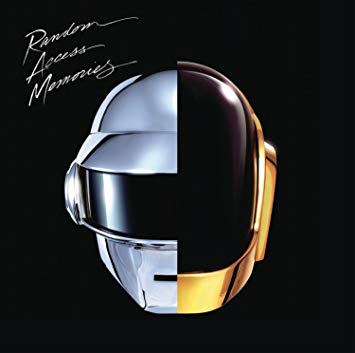
Daft Punk’s Random Access Memories Part 2

Picking up where we left off last week, today I’ll be finishing my review of Daft Punk’s Random Access Memories and giving it a final rating.

Before we dive into “Touch,” I feel it fair to correct a small error, for the sake of quality journalism (read: I like being right about things), which is that “Giorgo by Moroder” is a longer track than “Touch.” That’s it, really. Anyway, let’s actually talk about the music now.

“Touch” is a whole musical journey of its own. Opening on the sounds of wind and synths before taking a turn for the creepy as the atmosphere grows more tense and a distorted voice painfully whispers out the opening verse. A tense build up follows before suddenly: a calm solemn verse by fantastic guest vocalist Paul Williams. The verse builds into that staple funky energy that this album has held, calming a bit before coming back even stronger. A fantastic arrangement of drums, keys, and brass is what follows before a sudden breakdown of sci-fi laser synths that builds into a repeating of the core mantra of the song “Hold on, if love is the answer you’re home.” It builds as a choir of voices joins in, repeating on triumphantly before being interrupted by another transitional breakdown. What follows this breakdown is an uplifting arrangement of synth of strings as slowly but surely the choir of voices repeating the aforementioned phrase rejoins the song, as do those sci-fi synths from earlier. The section doesn’t stop building however, growing louder and louder into a powerful cacophony, overwriting the comforting, triumphant feeling with a sense of anxiety and confusion before suddenly it all…stops. The song then ends with a final solemn verse from Paul Williams, saying that touch has “given [him] too much to feel” and that it has “almost convinced [him he’s] real.” While the piece may have a strong pretentiousness to it with an exaggerated illustration of sensory overload and sensitivity overload, the music backing gives everything it has to illustrate the grand presentation, giving the listener a soundscape that emulates the emotions the song is trying to discuss. It’s a magical blend of musical word painting and atmosphere creation that I’m honestly quite addicted to. So, where do we go from here?

What is there to say about “Get Lucky” that hasn’t already been said. The stand out single from this album, “Get Lucky” was a radio hit, and a good one at that. It’s full six minute version might be off-putting to listeners used to the radio version, after all wouldn’t it get old after that long? Not really, I’d say. It’s still an enjoyable experience no matter which version of the track you listen to.

The next few songs, while all good, aren’t nearly as grand as “Touch,” so I’ll only discuss them briefly. “Beyond” is a much calmer, thoughtful track after the dancey, high energy “Get Lucky” that serves its role well as a bit of a calming piece, while still being enjoyable. “Motherboard” brings back the energy with rather erratic percussion and varied bass line. It’s the only true instrumental track on the album, giving Daft Punk full room to show off their skills with experimental, multi-emotional soundscapes. “Fragments of Time” is, while unfortunately probably the least memorable of the featured artist tracks, still a fun pseudo-romantic piece (I use the term pseudo-romantic here because while the track sounds romantic, the subject matter is more sentimental as Todd Edwards sings about keeping recordings, whether physical or mental, of positive memories throughout life). The next track, “Doin’ It Right” was a bit of an oddity, as it first stuck out to me as…not terribly great. But it got better as it went on, with the vocal talent of Panda Bear really adding to the experience.

The album’s closer, “Contact,” predictably tackles the concept of first contact with alien life, using an edited radio recording from the Apollo 17 mission to illustrate this. After this however, Daft Punk does what they do best and let the music do the talking and what occurs afterwards is a mix of anxiety, hopefulness, and above all, a lingering, wise feeling of change. The feeling of change permeates throughout the track, as it’s constantly taking new angles to its sound. One thing this song does that also stands out is its use of noise. Loud static can be heard throughout several sections of the songs, ramping up the anxiety associated with change. The ending in particular ends up morphing into a wall of erratic static and unsettling screeches and humming before breaking apart into a scatter of radio noises and static before giving out.

Overall, this album went far above and beyond any expectations I had going in, and I had blast nearly the way through. With highlights such as “Giorgio by Moroder,” “Touch,” “Get Lucky,” and “Contact” this album delivers a musical experience that gains greater value with each listen, as each track is so layered with different sounds and effects. As a final grade and to allow you to go back to doing whatever it may be your doing before reading all this:

I would give this album an 8/10, for an album that goes above and beyond to deliver a deep and highly re-listenable experience.

Thank you all for reading, and I’ll see you next week to discuss Fractal’s 2015 record Gaia.

Daft Punk’s Random Access Memories Part 1, The First Journey

Today we’ll talk about who I am, why am doing this, and far more importantly, what I’ve gathered from Daft Punk’s 2013 album Random Access Memories.

Since this is my first post on this blog, I suppose I should say a few things about myself before we get into the meat of it. Don’t worry, I’ll try to stay brief. My name is Zachary Sherman, but Zac works just fine. I’m a college student going for an accounting major and I spend most of my time doing dumb nerdy stuff like schoolwork, video games, and Dungeons & Dragons. So what makes me qualified to talk about music then? Well, nothing, except that I, like most people from what I understand, love listening to and exploring new kinds of music. I enjoy this so much that I’ve started a bit of a game with a few friends of mine in which we rotate out albums that we like for the others to listen to, like a book club but less nerdy…arguably.

With that out of the way, the first album I’ll be writing about, not the first one suggested to me, seeing as my actual ulterior motive in starting this blog is for a class assignment, is Daft Punk’s Random Access Memories. And now that I’ve bored you with the details and semantics, let’s get in to what actually matters.

I will start by saying my general music taste lies in rock music, both new and old. So when this album opens on some 80s-esque guitar noodling on “Give Life Back to Music” I’m already excited. I’d have heard of Daft Punk previously but always avoided really giving them a proper listen up to this point for various reasons, one of which I’ll bring up shortly. “Give Life Back To Music” follows up it’s big guitar opening with more of a jazzy feel, something that I must say, I’m quite a fan of. Incorporating jazz into rock has been something I’ve been a fan of since listening to my first Mars Volta record back in 15, and was further expounded upon in my exploration of Pink Floyd and King Crimson (Yeah I know, I did that a bit backwards.) However “Give Life to Music” also introduces quickly something I feared going in: that odd robot singing voice I had been previously made aware that Daft Punk likes to incorporate. My previous exposure to such, we’ll call them vocals for the ease of it, was a bit of EDM artist Haywyre’s work, and I must admit I was not a fan back then. Daft Punk however feels a bit different, where in other music I’ve heard the robotic vocals played substitute to regular vocals, Daft Punk’s implementation seems to be more focused around treating the vocals as another instrument to support the soundscape, oddly comparable to the guttural grows and screams of death metal.

The album’s next track, “The Game of Love,” has a very similar approach as the first track, which I will say with honestly worried me a bit about the variety that this album would have. Thankfully, my fears are quelled almost immediately.

The next track, “Giorgio by Moroder,” opens with, well, Giorgio Moroder talking about his experience getting started as a musician. It took a bit of outside research to learn that this man is considered a major pioneer of EDM music as a whole. After his rather interesting speech about his background, which has music subtlety building behind it throughout, the listener is treated to about two and half minutes of rather skillfully crafted, well, electronic music. After a time, Giorgio returns, wrapping up his speech before a few final comments, and then leaves us for the last four minutes of the song. Oh did I mention, this song is nine minutes long? The songs on this album in general tend to be extensive in length, though with their quality and dynamic structure, I would hardly call this a complaint. Just an observation, really. Regardless, something about this song and all the varying phases it goes through, be it a jazzy piano solo, a smooth bass solo, or a beautiful buildup from a choir of synths, something, perhaps all of it, was what got me hooked in. This is the song where everything started to “click” for me, and I cannot be grateful enough for how early such an experimental, genius track appears in the album.

What follows the prior epic is a slower, piano based “Within” and the dancier “Instant Crush” featuring The Stroke’s Julian Casablancas. One thing that tends to shine on this album are the guest musicians, their inclusions and spins on their tracks giving me Gorillaz vibes. Not to say the backing music on these songs aren’t just as fantastic and important of course. On the topic of guest musicians, the next track, “Lose Yourself to Dance,” is the first of two tracks featuring Pharrell Williams, who fits so well within the instrumentals that Daft Punk creates that it might bring to question why they didn’t get him on even more songs. Considering my only other exposure to Williams outside of Daft Punk is his later 2013 song, “Happy,” perhaps it would have been better if he stayed more focused on collaborating with Daft Punk. But maybe I’m judging a book by its cover at this point. Regardless, it would be some time before a song impacted me as much as “Giorgio by Moroder” did. But oh boy, would it happen again.

But I’m afraid we’ll have to cover that another time. This post has already run over long, I’m afraid. Next time we’ll pick up with Random Access Memories‘s longest track, “Touch,” and finish out the album with a final opinion. Thanks for reading!

Design a site like this with WordPress.com
Get started